
The Total Bath Systems Guide to a Future-Ready Bath or Shower

Aging in Place Starts With the Space You Use Every Day
If you plan to stay in your home for years to come, the bathroom deserves some extra thought. More specifically, the bath and shower area deserves it.
For many homeowners, getting in and out of the tub or shower is the first part of the bathroom that becomes less comfortable over time. A high tub wall, slippery floor, awkward shower controls, or lack of seating can turn a normal daily routine into something more difficult.
That is why an aging in place bathroom remodel often starts with the bathing area.
At Total Bath Systems, a future-ready bath or shower is about making smart choices now so the space can continue to work for you later, without sacrificing comfort or style today. With that in mind let's dive into just how a few simple decisions can make your bathroom work for years to come.
Start With the Biggest Question: Tub or Shower?
For an aging in place bathroom, this is often the most important decision.
A traditional bathtub can still be the right choice for some homeowners, especially if soaking is part of their routine. But stepping over a high tub wall may become more difficult with age.
With that in mind Total Bath Systems provides Walk-In Bathtubs. These bathtubs contain a special door in the side wall and include built in seating. These are perfect for those with walkers or wheelchairs as the design helps them transfer in and out of the bathtub with more ease.
For others, a tub-to-shower conversion may make more sense.
Replacing a traditional tub with a low-threshold or walk-in shower can reduce one of the biggest barriers in the bathroom while also giving the room a more open, updated appearance.
The right choice depends on how you use the space now and how you expect to use it in the future.
Future-Ready Options
A bathing area may include:
- Low-threshold shower entry
- Walk-in shower
- Walk-in tub
- Tub-to-shower conversion
- Built-in shower seating
- Handheld showerhead
- Easy-to-reach controls
- Support bars
- Built-in shower niches
The goal is not simply to make the bathroom "accessible." It is to make bathing easier, safer, and more comfortable.
A Walk-In Shower Can Do More Than Remove the Tub Wall
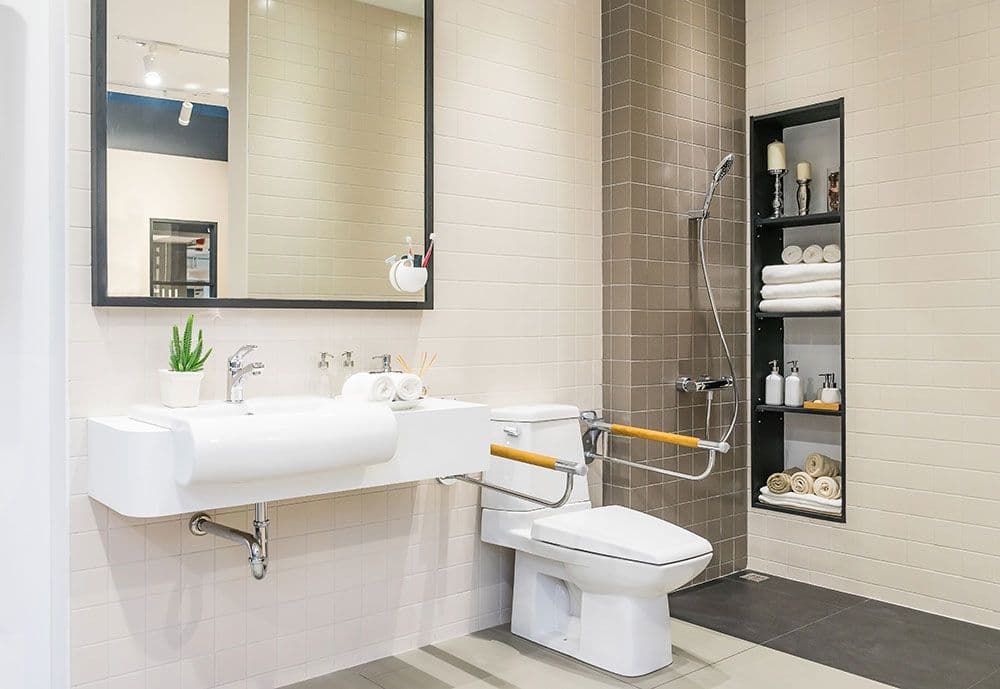
The biggest advantage of a walk-in shower for aging in place is obvious: easier entry. But good aging in place shower design goes beyond the threshold. Think about what happens once you're inside the shower. Can you comfortably reach the controls? Is there somewhere to sit if needed? Can you adjust the showerhead without stretching? Are shampoo, soap, and other essentials stored at a convenient height? Is there something sturdy to hold onto when entering or exiting?
A future-ready walk-in shower considers all of those details together.
Build Seating Into the Plan
Shower seating is one of the best examples of an aging in place feature that can be useful at any age.
A built-in or fold-down seat can make bathing easier if standing becomes tiring or uncomfortable. But even before that point, it can be convenient for shaving, washing, or simply relaxing in the shower.
The important part is planning for it before the shower is finished. When seating is incorporated into the overall design, it looks intentional rather than like something added later.
Put Support Where You Naturally Need It
Grab bars are another feature that can dramatically improve an aging in place bath or shower.
The old stereotype of the bulky institutional grab bar is increasingly outdated. Support bars now come in finishes and styles that can coordinate with faucets, showerheads, and other fixtures.
They can be positioned near:
- Shower entrances
- Seating areas
- Tub edges
- Shower controls
Even if you are not ready to install them today, preparing the walls during a bath or shower remodel may make it easier to add them later. That kind of planning is exactly what makes a bathroom future-ready.
Make the Showerhead Work for You
A fixed showerhead may be fine today, but a handheld showerhead can add much more flexibility over time.
It can be used while standing or sitting, makes rinsing easier, and can also make the shower itself easier to clean. For aging in place, consider pairing a handheld showerhead with a slide bar so the height can be adjusted for different users.
It's a small upgrade that can make the shower more comfortable for nearly everyone.
Put Controls and Storage Within Easy Reach
Aging in place is not only about avoiding falls. It is also about reducing unnecessary bending, stretching, and twisting.
That means shower controls and storage deserve careful placement.
A well-designed shower can include:
- Controls positioned near the entrance
- Built-in niches at comfortable heights
- Separate storage for different users
- Easy-to-reach handheld shower controls
- Shelving that does not require bending toward the floor
These are simple details, but they can make a significant difference in how easy the shower is to use every day.
Choose Bath and Shower Surfaces That Are Easier to Maintain
Maintenance is an often-overlooked part of aging in place. Traditional tile can be beautiful, but grout lines may require regular scrubbing, sealing, and maintenance.
That is one reason acrylic shower walls and PuroStone wall systems can be appealing for a future-ready bathroom. Their smoother, lower-maintenance surfaces can reduce the amount of bending and scrubbing needed to keep the shower looking clean.
Consider a Walk-In Tub When Bathing Is Still Important
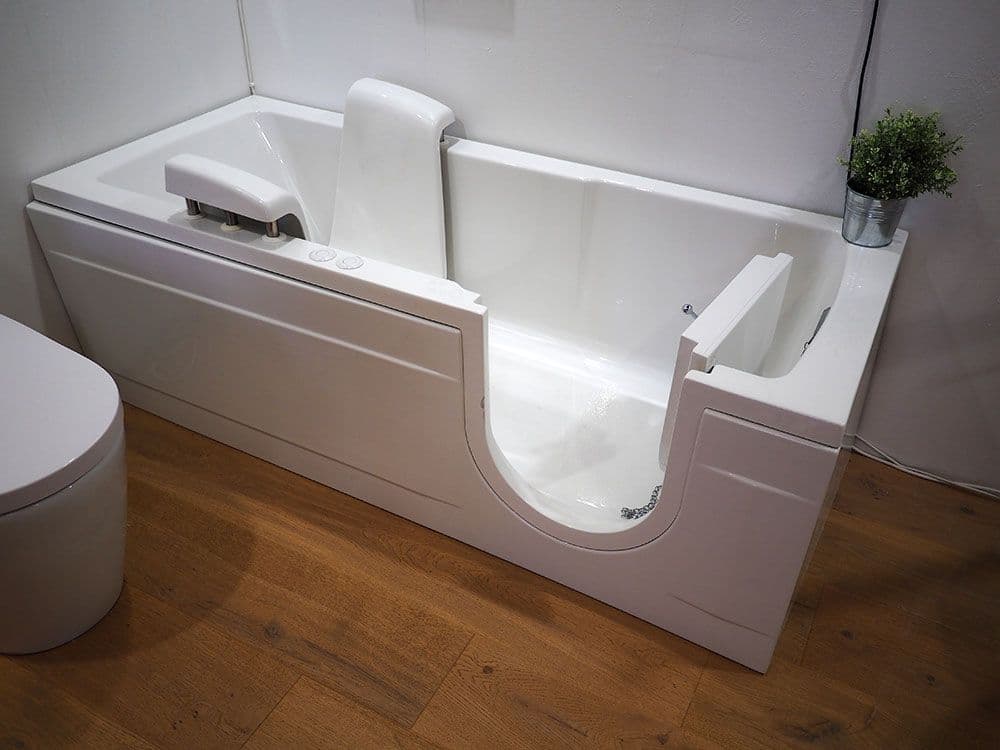
Not everyone wants to give up the bathtub. For homeowners who enjoy soaking or who may benefit from seated bathing, a walk-in tub can provide another aging in place option.
A walk-in tub allows the user to enter through a door rather than stepping over a traditional tub wall, then sit while bathing.
Depending on the model, features may include:
- Built-in seating
- Handheld showerheads
- Grab bars
- Hydrotherapy jets
- Lower entry thresholds
For some homeowners, that makes a walk-in tub a better fit than converting entirely to a shower.
Don't Forget the Rest of the Bathroom
The bath or shower may be the centerpiece of an aging in place bathroom remodel, but the rest of the room still matters. A few supporting improvements can make the bathing area easier to use.
Non-Slip Flooring
Choose flooring with good traction, especially near the tub or shower. Avoid surfaces that become extremely slippery when wet.
Better Lighting
Bright, even lighting around the shower, tub, vanity, and floor can make the room easier to navigate.
Comfort-Height Toilets
A slightly higher toilet can make sitting down and standing up easier for many adults.
Wider Access
If wheelchair or walker access may eventually be important, door width and clear floor space should be considered during the remodel.
These features support the bathing area without taking the focus away from it.
The TBS Future-Ready Bath & Shower Checklist
When planning an aging in place bath or shower, ask:
Entry: Can you get in and out easily?
Threshold: Is there a high step to clear?
Support: Is there something secure to hold onto?
Seating: Could you comfortably sit if needed?
Controls: Are they easy to reach?
Showerhead: Can it be used while standing or sitting?
Storage: Are toiletries within comfortable reach?
Traction: Are the shower base and surrounding floor designed with wet conditions in mind?
Maintenance: Will the surfaces be easy to keep clean?
Style: Does the space still look like a bathroom you want to live with?
Aging in Place Should Still Feel Like a Bathroom Remodel
Aging in place should not mean giving up on design.
A modern walk-in shower with acrylic or PuroStone walls, glass doors, coordinated fixtures, built-in seating, and thoughtfully placed support bars can look like a beautiful bathroom upgrade because that is exactly what it is. The difference is that it has been designed with tomorrow in mind.
At Total Bath Systems, that is the idea behind a future-ready bath or shower: a bathing space that is comfortable now, easier to use later, and designed to stay part of your home for years to come.
Frequently Asked Questions
Q. What is the best shower for aging in place?
A. For many homeowners, a low-threshold or walk-in shower is a strong option because it reduces the need to step over a traditional tub wall. Seating, grab bars, handheld showerheads, and easy-to-reach controls can make it even more future-ready.
Q. Is a tub-to-shower conversion good for aging in place?
Yes, especially for homeowners who rarely use their bathtub. A tub-to-shower conversion can remove a high entry barrier while creating a more open and accessible bathing area.
Q. Is a walk-in tub better than a walk-in shower?
A. It depends on the homeowner. A walk-in shower may offer easier access and more open space, while a walk-in tub may be preferable for someone who wants seated bathing or soaking.
Q. Can an aging in place shower still look modern?
A. Absolutely. Acrylic shower walls, PuroStone, glass doors, modern fixtures, decorative support bars, and built-in seating can all be incorporated into a contemporary bathroom design.
Q. Should I add grab bars before I need them?
A. You do not necessarily have to install them immediately, but it may be smart to prepare the walls during a remodel so support bars can be added more easily later.
Q. Do I need a full bathroom remodel to improve aging in place safety?
A. Not always. In many bathrooms, replacing the tub or shower, lowering the threshold, adding seating, improving support, and upgrading the showerhead can make a major difference without completely rebuilding the room.
Pumpkin Spice & Savings So Nice!
Up to $1500 Off during October!
View all our offers here.
* see below for offer details